


Burke Creek Ranch Alternatives for Families: 2026 Guide

Table of Contents
Why Families Look Beyond a Single Ranch for Beef
How to Compare Beef Farms: Family Criteria That Matter
Production Claims: Grass-Fed, Grass-Finished, and Pasture-Raised
Processing, Packaging, and Freezer Fit
Questions to Ask a Beef Ranch Before You Order
Beef Shares for Families: Bulk, Half, and Custom Options
Match the Box to Your Household
Choose Cuts Around How You Cook
Frequency, Storage, and Rotation
Alberta Beef Delivery: What to Expect from Farm to Door
Side-by-Side: Generic Ranch Profiles for Alberta Families
Conclusion: Choosing the Right Alternative for Your Family
Frequently Asked Questions
Last Updated: October 12, 2026
Why Families Look Beyond a Single Ranch for Beef
Shopping for beef as a family is rarely about one ranch. That is why so many households search for Burke Creek Ranch alternatives for families: they want the same standard of local, pasture-raised beef with more flexibility on quantity, delivery, and proof of how the animal was raised.
Families want nutrient-dense, locally raised meat without committing to a bulk order that overwhelms a condo freezer. This guide breaks down how to compare farms on the criteria that actually matter to a household, from production claims to delivery logistics.
The short answer: the best alternative is not a single ranch name. It is whichever operation lets you verify its practices, buy a size that suits your kitchen, and get the order to your door without thawing on the step.
How to Compare Beef Farms: Family Criteria That Matter
Comparing beef farms means scoring each operation on five things: production claims, processing and packaging, order size, delivery, and transparency. Price matters, but only after you know what you are paying for.

Here is a checklist we suggest families work through before placing a first order:
Ask what the cattle eat and whether they are grass-fed, grass-finished, or grain-finished
Confirm the animals are raised without added hormones or routine antibiotics
Check whether the ranch is family-run and how long it has operated
Ask about processing: which facility, and whether it is provincially inspected
Confirm package sizes and whether they fit your freezer
Get delivery windows, minimums, and how the order arrives frozen
Ask for proof of claims, not just marketing language
Production Claims: Grass-Fed, Grass-Finished, and Pasture-Raised
Grass-fed beef comes from cattle raised on pasture and forage. Grass-finished beef means the animal stayed on grass its entire life, right through to slaughter. Pasture-raised describes the living conditions rather than the diet.
The three terms get used interchangeably, and they should not be. A ranch can raise cattle on pasture and still finish them on grain. If finishing method matters to your family, ask the question directly and get a plain answer.
A common mistake is assuming "grass-fed" on a label tells you everything. It does not. Ask what the cattle ate in the final months, and whether the ranch can describe its grazing practices, such as rotational grazing and soil health management.
Processing, Packaging, and Freezer Fit
Processing is where family orders succeed or fail. A side of beef arrives as a large volume of frozen cuts, and a household with a small freezer can end up with more than it can store.
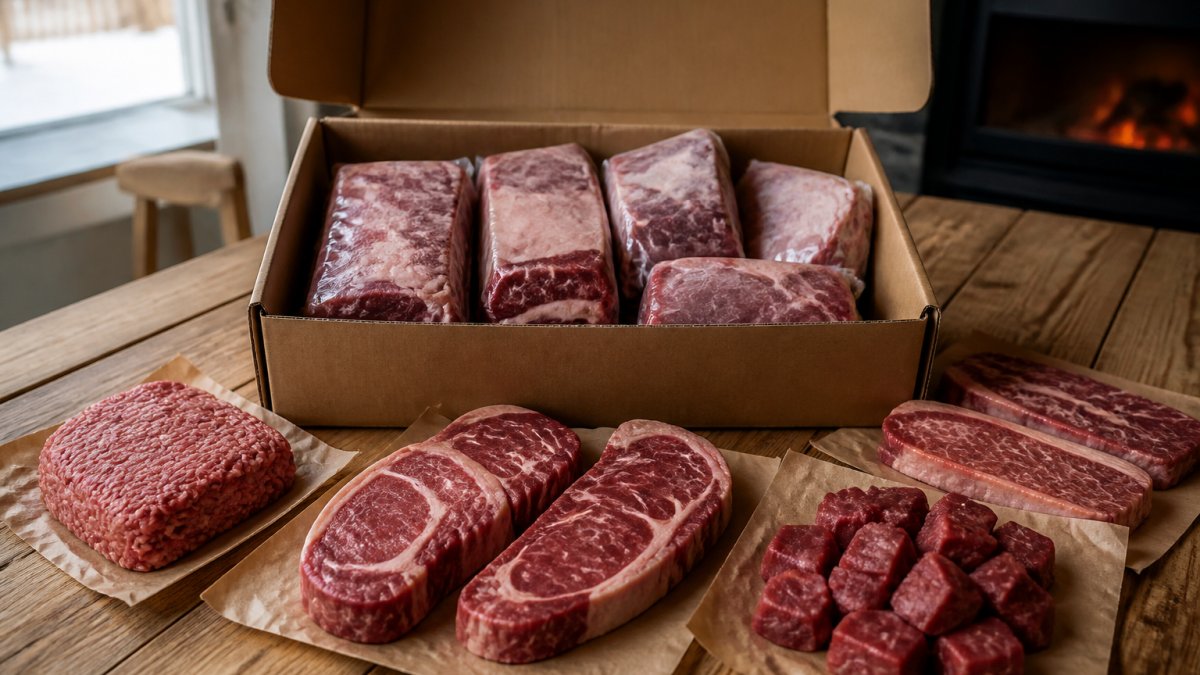
Ask how the meat is cut and how each package is sealed. Vacuum-sealed portions stack far better than bulky butcher paper. If you live in a condo, ask whether smaller bundles or mixed boxes are available instead of a full share.
Pro Tip Ask for a cut sheet before you commit.
Questions to Ask a Beef Ranch Before You Order
The fastest way to separate a serious operation from a marketing page is to ask five direct questions. Good ranches answer them without hesitation.
What did the cattle eat, and how were they finished? You want a specific answer, not "natural."
Are they raised without added hormones or routine antibiotics? Ask whether a sick animal is ever treated, and how that is handled.
Where is the meat processed, and is the facility inspected? A licensed, inspected facility is a baseline, not a bonus.
What are my order size options? Bulk share, half, quarter, or smaller bundles.
How does delivery work? Timing, frozen packaging, and what happens if you are not home.
If a ranch dodges the processing question, treat it as a signal. Transparency is the whole point of buying direct.
Beef Shares for Families: Bulk, Half, and Custom Options
Beef shares come in three broad formats: a whole or side (bulk), a half or quarter share, and custom bundles sized for smaller households. The right pick depends on your freezer space and how much beef you cook each week. This is the part most ranch pages skip, so here is how to actually size an order to your household.
Option | Typical Size | Best For | Freezer Demand |
Whole or side share | Largest volume | Large families, split with relatives | Chest freezer required |
Half share | Large volume | Families of 4+ cooking beef often | Full freezer section |
Quarter share | Moderate volume | Couples and small families | Standard freezer |
Custom bundle | Smallest, flexible | Condos and first-time buyers | Shelf or drawer space |
Match the Box to Your Household
Start with meals per week, not with the size of the share. A household that cooks beef three nights a week needs a very different order than one that cooks it once. As a rough pattern, most families find that a quarter share suits two to three people eating beef a few times a week, a half share suits four or more eating it often, and a custom bundle is the safer first order for anyone unsure.
Then check your freezer honestly. Measure the empty space, not the space you think you have. A standard fridge freezer section holds far less than most people estimate once ice trays and frozen vegetables are in it.
Choose Cuts Around How You Cook
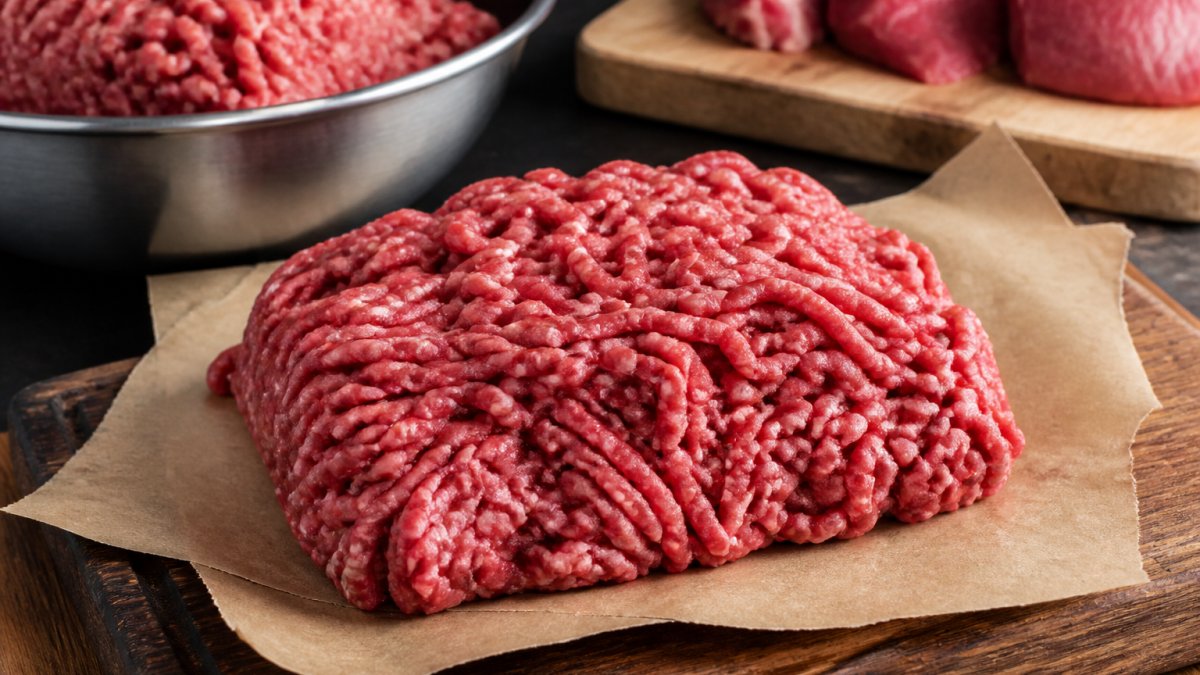
The thing nobody tells you about bulk shares is that the cut mix is fixed by the animal. You get a lot of ground beef whether you want it or not. If your kids only eat burgers and tacos, that is fine.
Ask these questions before you commit:
How is each portion packaged, and does it stack?
Frequency, Storage, and Rotation
Buying in bulk only saves money if you eat what you buy. Plan a rotation: use older packages first, keep a running list on the freezer door, and avoid refreezing thawed meat. If your freezer is small, a smaller bundle delivered more often will beat a large share every time.
Watch Out Ordering a half share for a condo freezer usually ends in waste. Meat that gets refrozen or left too long loses quality, and you have paid for all of it.
Key Takeaway Size the order to meals per week and measured freezer space, not to the biggest discount. A custom bundle you finish is better value than a half share you throw away.
Alberta Beef Delivery: What to Expect from Farm to Door
Alberta beef delivery from a family farm generally means frozen shipping or scheduled local drop-off, with the order arriving solid and ready for the freezer. The details vary, so confirm them before you buy.
Ask three things: how the meat is kept frozen in transit, whether you need to be home, and what the delivery window looks like. A ranch that personally delivers often gives you a narrower window and a real person to contact if plans change.
For families juggling work and school, the practical question is whether you can leave a cooler out or arrange a drop time. Get that settled before your first order, not after.
Side-by-Side: Generic Ranch Profiles for Alberta Families
Most Alberta beef operations fall into a few recognizable profiles. Naming them by type, rather than by brand, helps you compare without getting lost in marketing. The table below outlines location, beef type, farming practice, ordering options, and delivery area.
Ranch Profile | Typical Location | Beef Type | Farming Practice | Ordering Options | Delivery Area |
Large multi-generational ranch | Central or southern Alberta | Grass-finished Black Angus | Rotational grazing, family-run for decades | Whole, side, and half shares | Provincial courier, some local pickup |
Small regenerative farm | Foothills and parkland | Grass-fed, sometimes grass-finished | Cover cropping, mob grazing, soil-health focus | Quarter shares and seasonal bundles | Local drop-off, limited radius |
Direct-delivery family farm | Mixed farmland near major cities | Grass-finished or grain-finished | Pasture-raised, no added hormones or routine antibiotics | Custom bundles, mixed boxes, shares | Personal delivery within a set region |
Retail-style online butcher | Urban warehouse or fulfillment hub | Sourced from multiple farms | Varies by supplier, less traceable | Individual cuts, small boxes | Canada-wide courier shipping |
Read the table by column, not by row. If delivery area is your deciding factor, start there and work left. If farming practice matters most, start with that column and filter out anything you cannot verify.
A few patterns are worth knowing before you call anyone:
Location shapes delivery. Farms close to a major city usually offer personal drop-off with a narrow window. Farms farther out rely on courier shipping, which means a box at the door and no one to hand it to.
Beef type narrows your search fast. Grass-finished, grass-fed, and grain-finished are not the same product, and a farm that is vague about which one it sells is a farm that will be vague about everything else.
Farming practice is where claims diverge. Rotational grazing, cover cropping, and soil-health management are real practices you can ask about. "Natural" is not a practice.
Ordering options decide whether you can actually buy. A ranch with a great story and a whole-share minimum is not an alternative for a condo family.
Delivery area is the hard filter. Confirm your postal code is inside the delivery region before you fall in love with a farm's website.
Pro Tip Print or copy the table and fill in a row for each farm you are seriously considering. Two or three rows side by side will tell you more than an hour of browsing ranch homepages.
Our own approach at Pure Alberta Beef sits in the direct-delivery family farm profile. We are AB Inspected and operate a licensed food handling facility, we deliver personally from our family farm, and we offer sizes that fit real kitchens rather than forcing a bulk commitment.
Conclusion: Choosing the Right Alternative for Your Family
The right alternative to any single ranch comes down to fit: a size your freezer can hold, a delivery you can live with, and claims you can verify. Start with the checklist above, ask the five questions, and match the share format to how your household actually eats.
If you want locally raised, humanely raised beef delivered from a family farm, Pure Alberta Beef offers 100% Canadian beef, minimally processed, with direct delivery and a licensed, inspected facility behind every order. View our products to find a bundle that fits your family.
Frequently Asked Questions
What should families look for when buying locally raised beef?
Focus on transparency, animal welfare, and processing standards. Ask whether the ranch is family-run, how cattle are raised (grass-fed, grass-finished, pasture-raised), and whether hormones or antibiotics are used. Check for provincial inspection and food-handling licenses. For families, also consider package sizes that fit your freezer and delivery options that work with your schedule. Pure Alberta Beef, for example, is AB Inspected and delivers directly from its family farm.
How do beef shares for families work?
Beef shares are bulk purchases, typically a quarter, half, or whole animal, butchered into cuts and packaged for pickup or delivery. You pay a deposit, then the balance based on final weight. Shares suit families with ample freezer space and a preference for consistent quality. If you lack space, many ranches offer smaller bundles or curated boxes. Always confirm packaging size and whether delivery is included.
Is buying beef directly from a farm practical for families?
Yes, if you plan meals and have freezer capacity. Direct-from-farm beef often costs less per kilogram than retail for comparable quality, and you know the source. The trade-off is buying in larger quantities and scheduling delivery. Many Alberta farms offer flexible delivery windows and smaller bundles to accommodate busy families. Start with a sampler box to test quality before committing to a larger share.
How can you verify where beef is raised and processed?
Ask for the farm's location, inspection certificates, and processing facility details. In Alberta, provincially inspected facilities meet strict food safety standards. A transparent ranch will share this information readily. You can also visit the farm if it's nearby, or check online reviews and social media for customer experiences. Pure Alberta Beef, for instance, provides AB Inspected labeling and personally delivers from its family farm.
Families across Alberta are looking for beef they can trust without guessing at the label. Pure Alberta Beef delivers locally raised, humanely raised beef straight from our family farm, backed by AB Inspected processing and a licensed food handling facility. Get started with Pure Alberta Beef and stock your freezer with beef your family can feel good about.
View Products
Comments